
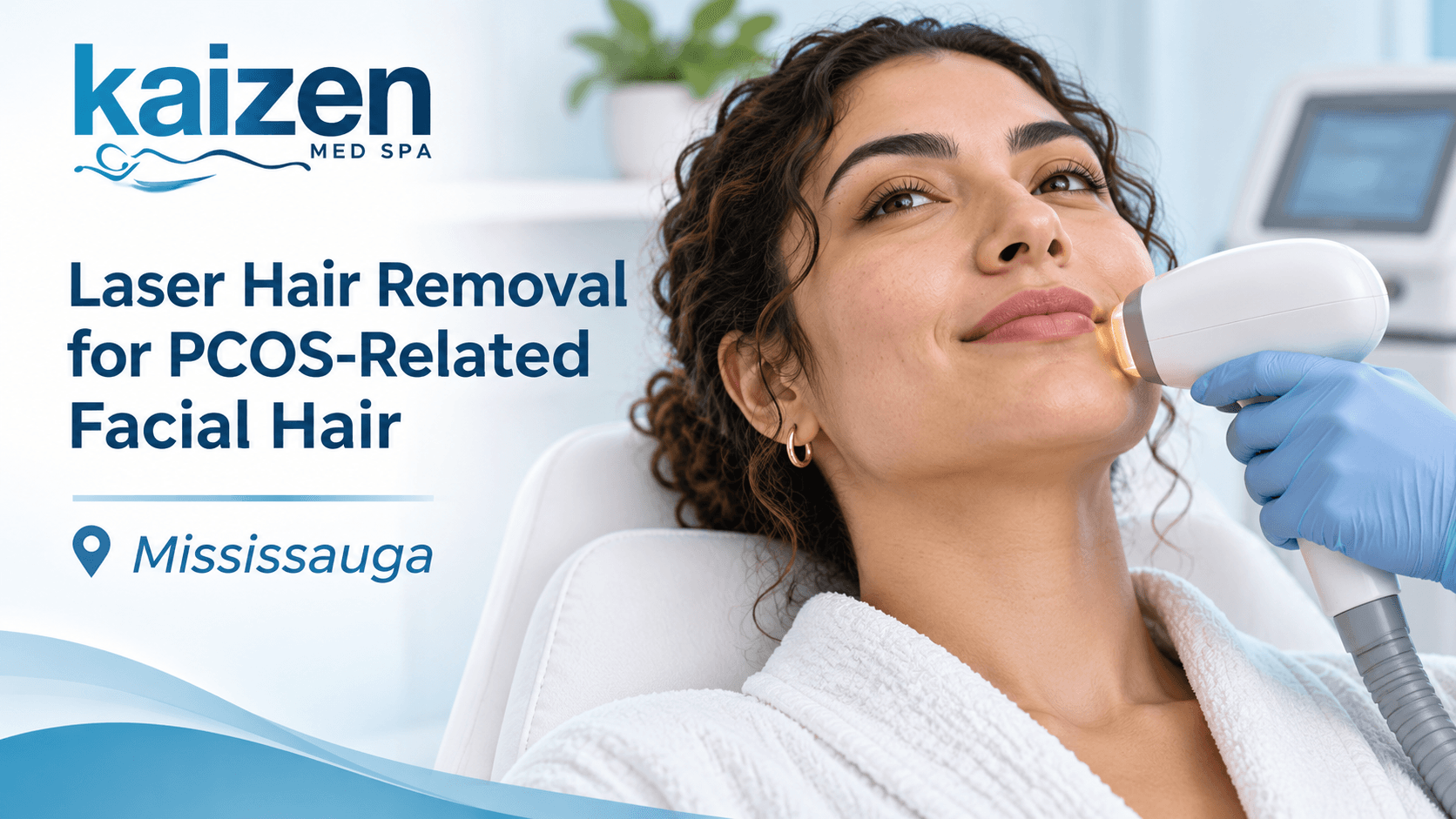
Dealing with unwanted facial hair can be frustrating, especially when it keeps growing back no matter how often you remove it. For many women with Polycystic Ovary Syndrome (PCOS), facial hair is more than just a beauty concern. It can affect confidence, make skincare difficult, and turn everyday grooming into a tiring routine.
Shaving, threading, and waxing may give temporary results, but the hair often returns. This is why many women consider laser hair removal Mississauga treatments for longer-lasting hair reduction.
But does laser hair removal work for PCOS-related facial hair? Is it safe for sensitive areas like the chin and upper lip? Let’s understand how the treatment works and what you should expect.
Why Does PCOS Cause Unwanted Facial Hair?
PCOS is a hormonal condition that can affect ovulation, menstrual cycles, and hair growth. Some women with PCOS have higher levels of hormones called androgens, which can encourage thicker, darker hair to grow in areas where fine hair is usually more common.
This type of excessive hair growth is known as hirsutism.
Common areas affected include:
- Chin and jawline
- Upper lip
- Sideburns and cheeks
- Neck and lower face
Hair growth can vary from one person to another. Some women notice a few coarse chin hairs, while others experience more noticeable growth across several facial areas.
Because PCOS affects hormones, removing the hair does not address the underlying hormonal changes.
How Does Laser Hair Removal Work for PCOS?
Laser hair removal uses concentrated light to target pigment in the hair. The light produces heat that damages the hair follicle and reduces its ability to grow hair.
Over several treatments, hair may become finer, lighter in appearance, or less noticeable.
For women exploring facial laser hair removal Mississauga, the treatment can offer a longer-lasting alternative to frequent shaving or threading.
However, there is one important thing to understand.
Laser treatment does not cure PCOS or permanently stop hormone-related hair growth. New hairs may develop over time, and maintenance sessions may be needed.
Results also depend on your hair colour, skin tone, hormone levels, and treatment settings.
Chin Laser Hair Removal for PCOS
The chin is one of the most common areas where women with PCOS experience unwanted facial hair.
Some women notice thick, dark strands that return quickly after plucking or shaving. Others develop hair along the jawline or underneath the chin.
Chin laser hair removal Mississauga treatments aim to reduce these coarse hairs gradually.
During treatment, a trained professional directs the laser towards the selected areas.
The procedure is usually brief because the chin covers a relatively small area.
You may feel a warm snapping sensation, followed by temporary redness or mild sensitivity.
One important consideration is that laser treatment may occasionally stimulate additional hair growth, particularly on the face. A proper consultation can help determine whether your hair type is suitable.
Upper Lip Laser Hair Removal for PCOS
The upper lip is another area where unwanted hair can become noticeable.
Regular waxing or threading may leave the skin feeling sensitive. For some women, frequent hair removal also causes irritation.
Upper lip laser hair removal Mississauga treatments focus on reducing suitable pigmented hair around this delicate area.
Protective eyewear is used during treatment, and the skin should be assessed beforehand.
The upper lip can feel more sensitive than other areas, but discomfort is usually brief.
Laser treatment is generally more effective on coarse, dark hair than on very fine or light-coloured facial hair.
For fine facial hair, another removal method may be more appropriate.
What Happens During Your First Laser Hair Removal Appointment?
Your first appointment usually begins with a consultation. The practitioner will ask about your medical history, skin concerns, and previous hair removal methods.
They may also discuss your PCOS diagnosis, medications, and hormonal treatments.
After examining your skin and hair, they can recommend suitable laser settings and explain the possible results.
During treatment, you may notice a mild snapping sensation against your skin. Cooling methods may help reduce discomfort.
Temporary redness or swelling can occur afterwards, but these reactions usually settle.
How Many Sessions Are Needed for PCOS Facial Hair?
Laser hair removal works best when hairs are in an active growth stage. Since not all hairs grow at the same time, multiple appointments are generally needed.
Women with PCOS may require additional sessions because hormonal changes can continue stimulating hair growth.
Some people notice gradual improvements after several treatments, while others need ongoing maintenance.
Your practitioner should discuss realistic expectations rather than promise permanent removal.
How to Prepare for Laser Hair Removal
Good preparation can help protect your skin and support a smoother treatment experience.
Before your appointment:
- Avoid waxing, threading, and plucking for the recommended period.
- Shave the treatment area according to your practitioner’s instructions.
- Avoid tanning and excessive sun exposure.
- Arrive with clean skin, free from makeup.
- Share details about medications and active skincare products.
- Mention any recent irritation or skin infections.
Afterwards, use gentle skincare, protect your face from sunlight, and follow the aftercare instructions provided.
Why Choosing the Right Laser Clinic Matters
Not every laser treatment is suitable for every skin tone or hair type.
A professional laser clinic Mississauga should assess your skin carefully before recommending treatment.
Ask about the equipment used, practitioner experience, possible side effects, and expected maintenance.
Choosing a clinic that understands hormone-related hair growth is especially important. You deserve clear answers and realistic expectations before committing to a treatment plan.
Conclusion
PCOS-related facial hair can be difficult to manage, particularly when shaving and threading become a regular part of your routine. Laser hair removal may offer longer-lasting reduction, although ongoing hormonal changes can affect the results.
At Kaizen Medspa in Mississauga, you can explore professional laser hair removal options and discuss your facial hair concerns through a personalized consultation. With suitable treatment planning and realistic expectations, managing unwanted facial hair can become a little easier.
Frequently Asked Questions
1. Is laser hair removal effective for PCOS-related facial hair?
Yes, laser hair removal can reduce thick, dark facial hair caused by PCOS. However, hormonal changes may trigger regrowth, making occasional maintenance sessions necessary.
2. How many laser hair removal sessions are needed for PCOS?
Most people need multiple sessions to notice significant hair reduction. Women with PCOS may require additional treatments or maintenance appointments due to ongoing hormonal changes.
3. Is laser hair removal safe for the chin and upper lip?
Yes, laser hair removal can be safe for these areas when performed by trained professionals. Proper skin assessment and suitable laser settings help minimize potential risks.
4. Can PCOS facial hair grow back after laser hair removal?
Yes, facial hair can grow back because PCOS-related hormonal changes may stimulate new growth. Maintenance sessions can help manage regrowth and maintain smoother-looking skin over time.
5. Does laser hair removal hurt on sensitive facial areas?
You may feel mild snapping or warmth during treatment. Sensitive areas like the upper lip can feel uncomfortable, but cooling techniques may help reduce the sensation.
